In the world of high horology, there is a clear dividing line between “flash” and “architecture.” While the round brilliant cut is designed for maximum fire and sparkle, the baguette cut is about geometry, clarity, and understated power.
At Rolex, baguette diamonds are a gatekeeper. You won’t find them on stainless steel; they are reserved strictly for the “noble” metals—18k gold and 950 platinum. Today, we’re looking at ultra rare pieces from our showcase to break down the different ways Rolex utilizes these step-cut masterpieces.
The Cover Star: The Full Baguette Bezel
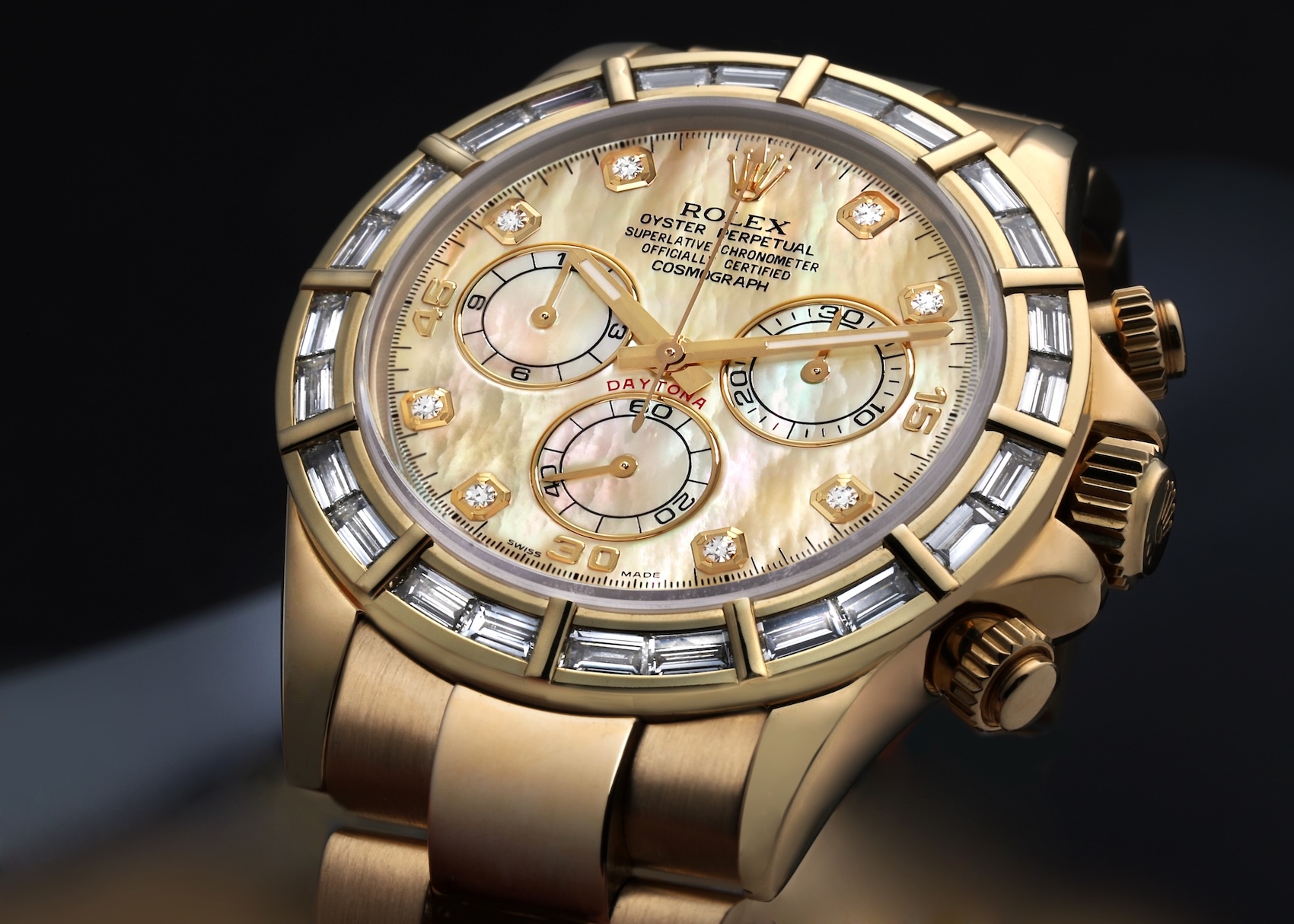
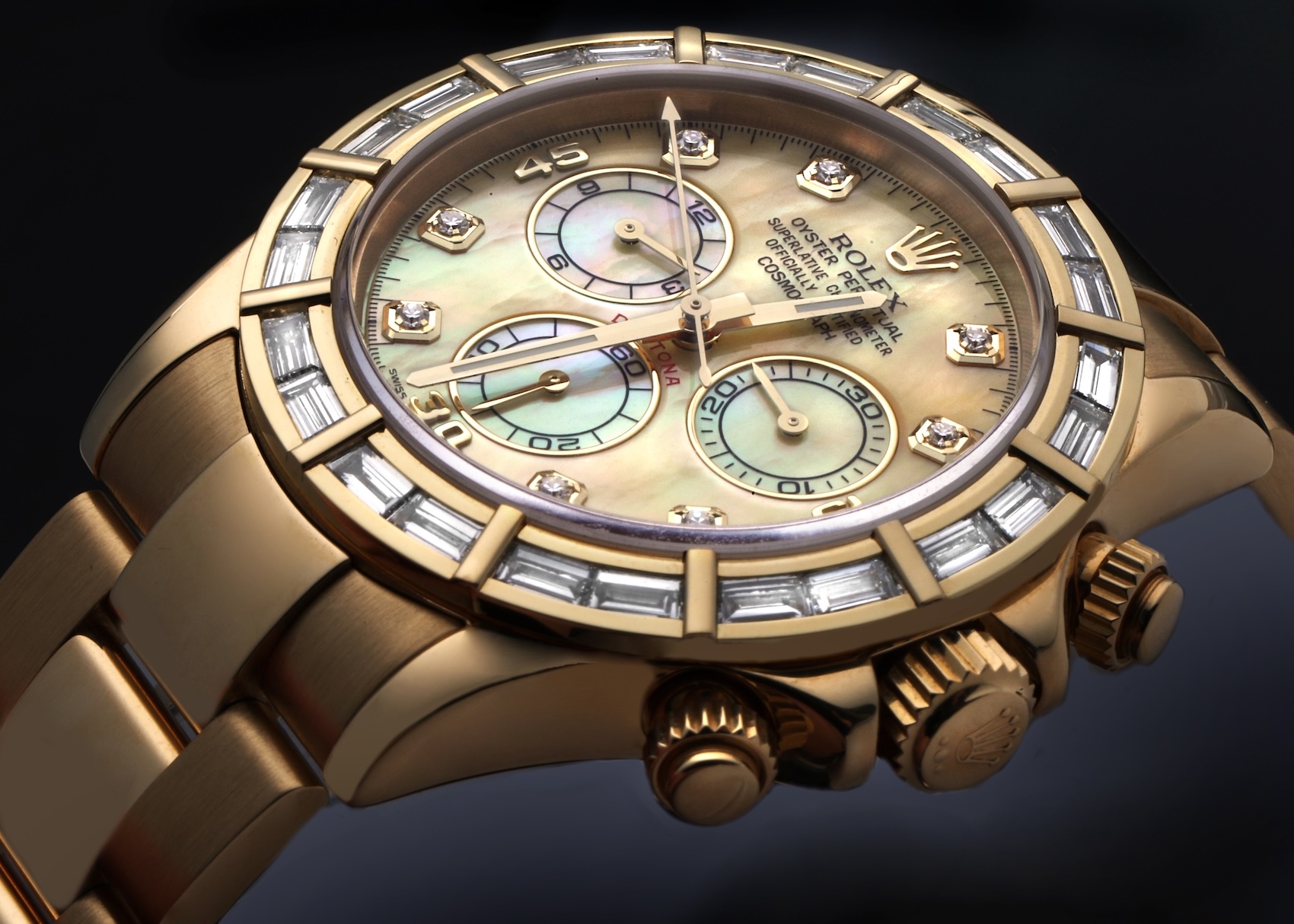
When Rolex moves the baguettes from the dial to the bezel, the watch’s silhouette changes entirely. On this Yellow Gold Daytona with a Mother of Pearl dial, the baguette bezel adds a frame of solid light. Unlike a fluted bezel that scatters light, the baguette bezel organizes it, making the 40mm case feel even more substantial and authoritative on the wrist.
1. The “Stealth Wealth” Hour Marker
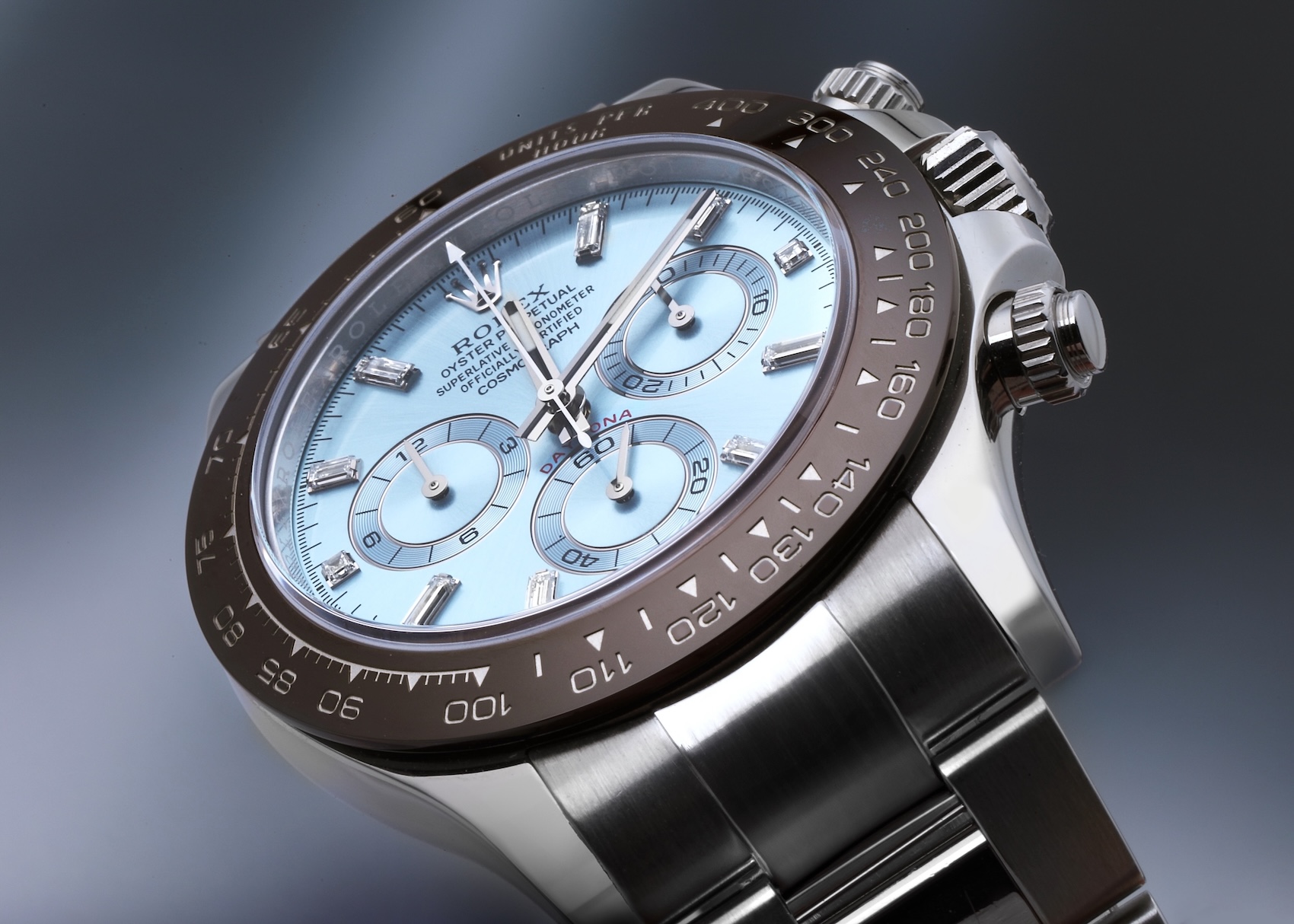
The Platinum Daytona (Ref. 126506) is the “Final Boss” of the Rolex catalog. Here, the baguette diamonds replace standard indices. Because they are step-cut, they don’t scream for attention. They catch the light in broad, elegant flashes that mirror the cool tones of the platinum case and ice-blue dial. This is the blueprint for modern masculine jewelry in 2026.
2. The Warmth of Everose and Chocolate
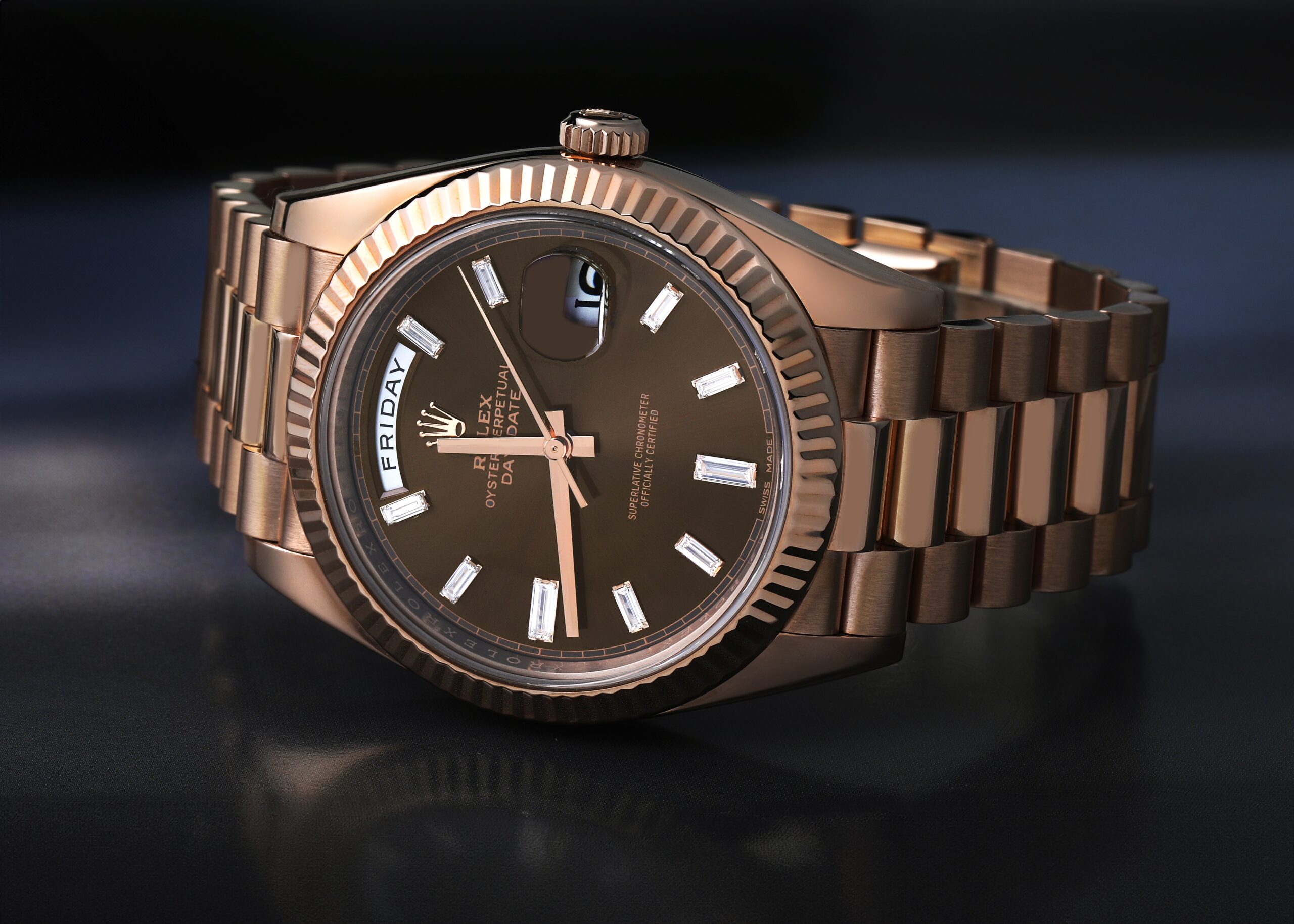
The Everose Day-Date 40 remains one of the most sought-after configurations in the President collection. The warmth of the chocolate dial needs a specific kind of light to pop. The long, flat facets of the baguette markers act like tiny mirrors, providing a sharp, white-light contrast against the deep brown sunray finish.
3. High-Contrast Artistry: The “SARU” and “Zebra” Styles
Rolex often uses baguettes to create literal patterns, treating the watch face as a canvas for material exploration.
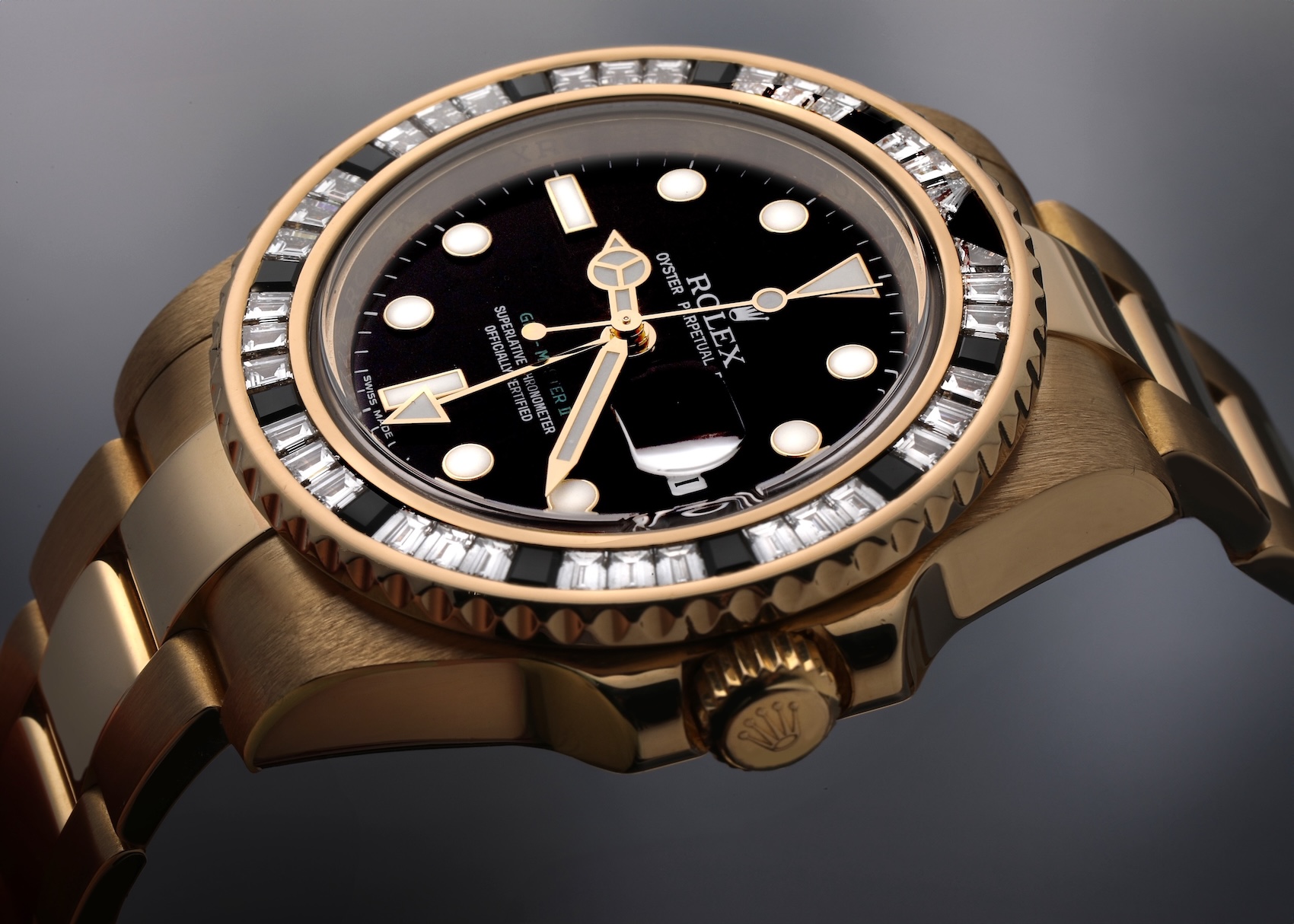
The GMT-Master II “SARU” Bezel: Here, baguettes are used in alternating clear diamonds and black sapphires (or onyx). It’s a functional use of a decorative cut—a classic Rolex move where the stones actually serve to denote day and night.
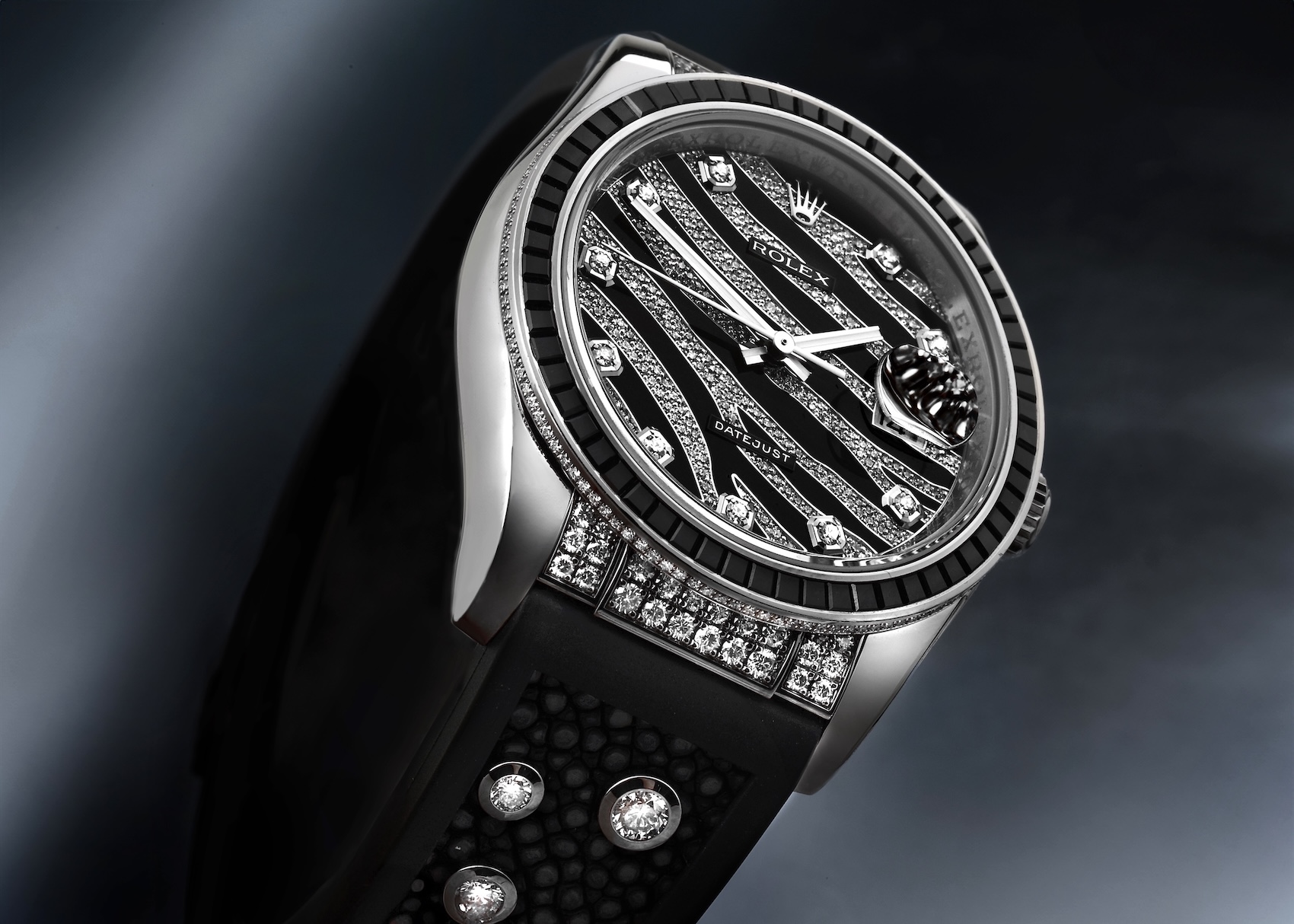
The Zebra (Ref. 116199): In this Datejust, the baguette form is used for the black lacquer stripes, creating a textural landscape that blurs the lines between watchmaking and abstract art.
4. Technical Icing: The Professional Line
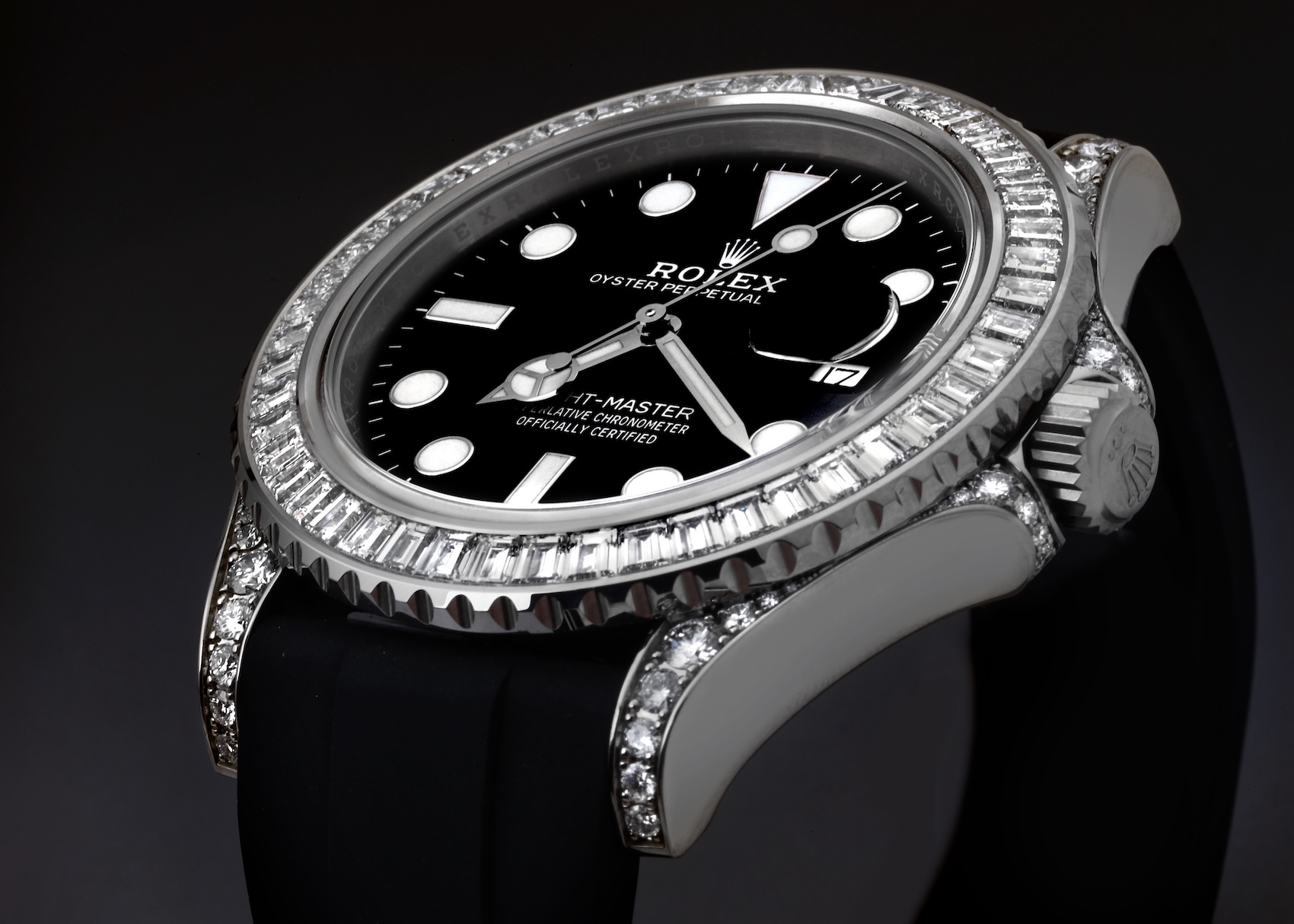
Even the “professional” line receives the baguette treatment. The Yacht-Master shown here features a bezel entirely set with diamonds. Because baguettes sit flush against one another with almost no visible metal between them, the bezel appears as one continuous, unbroken ring of ice.
5. The Spectrum of Color
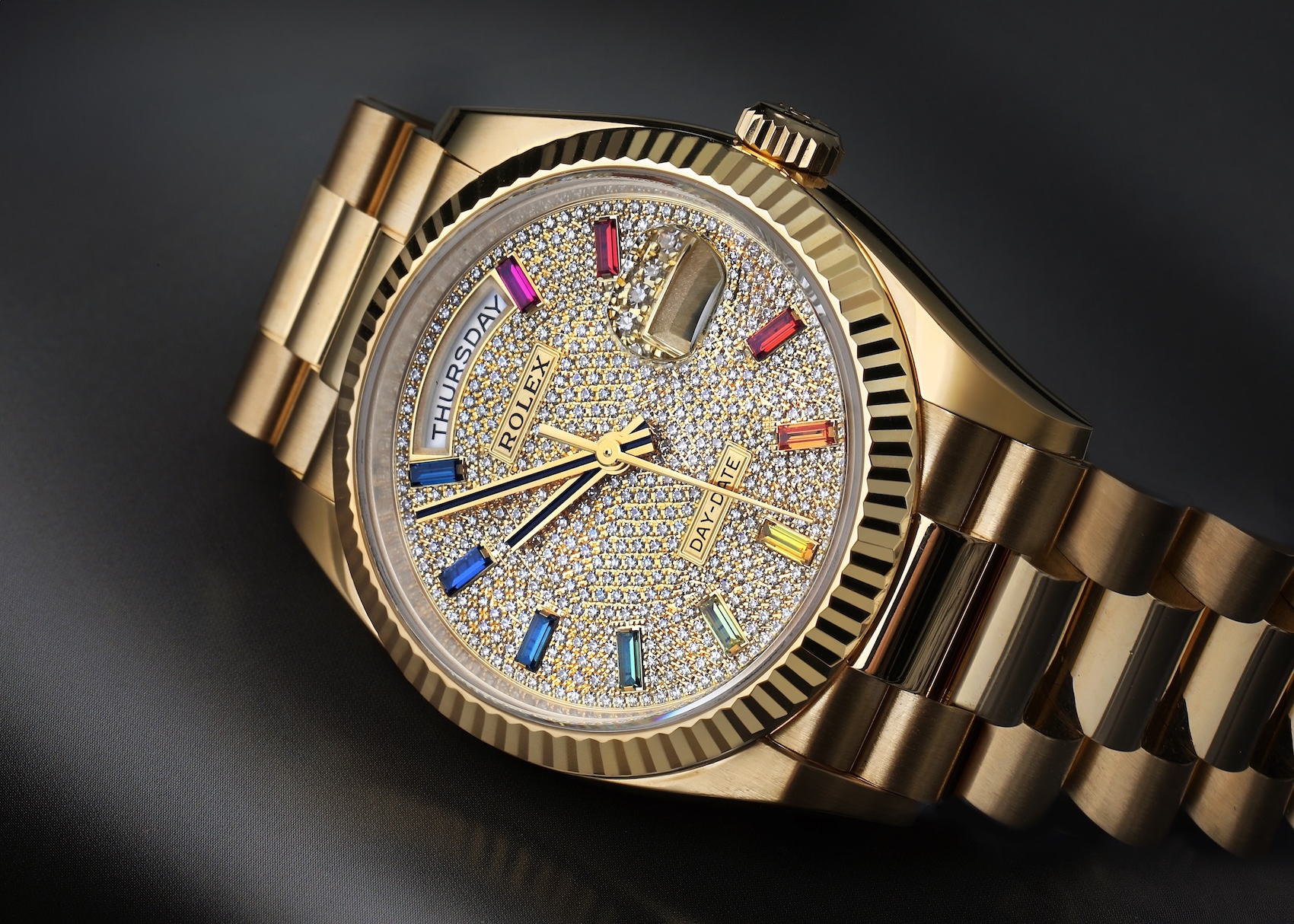
Finally, we have the chromatic mastery of the Rainbow Day-Date. These baguette-cut sapphires must be perfectly matched in tone and hue to create a seamless gradient. The technical difficulty of sourcing and setting these stones is why they remain among the rarest “factory” watches in existence.
Explore the Artistry at SwissWatchExpo
The beauty of a factory-set Rolex baguette watch is that it never goes out of style—it only grows more distinguished as the market shifts toward craftsmanship over “bling.” At SwissWatchExpo, we offer these rare timepieces with original Rolex Factory diamonds and sapphires, ensuring every stone and setting meets the rigorous standards of the Crown. Whether you are seeking the “quiet luxury” of a Platinum Daytona or the bold architectural statement of a baguette-bezel Day-Date, our collection is curated to represent the pinnacle of horological gem-setting.
Explore our current selection of Rolex Diamond Watches here.