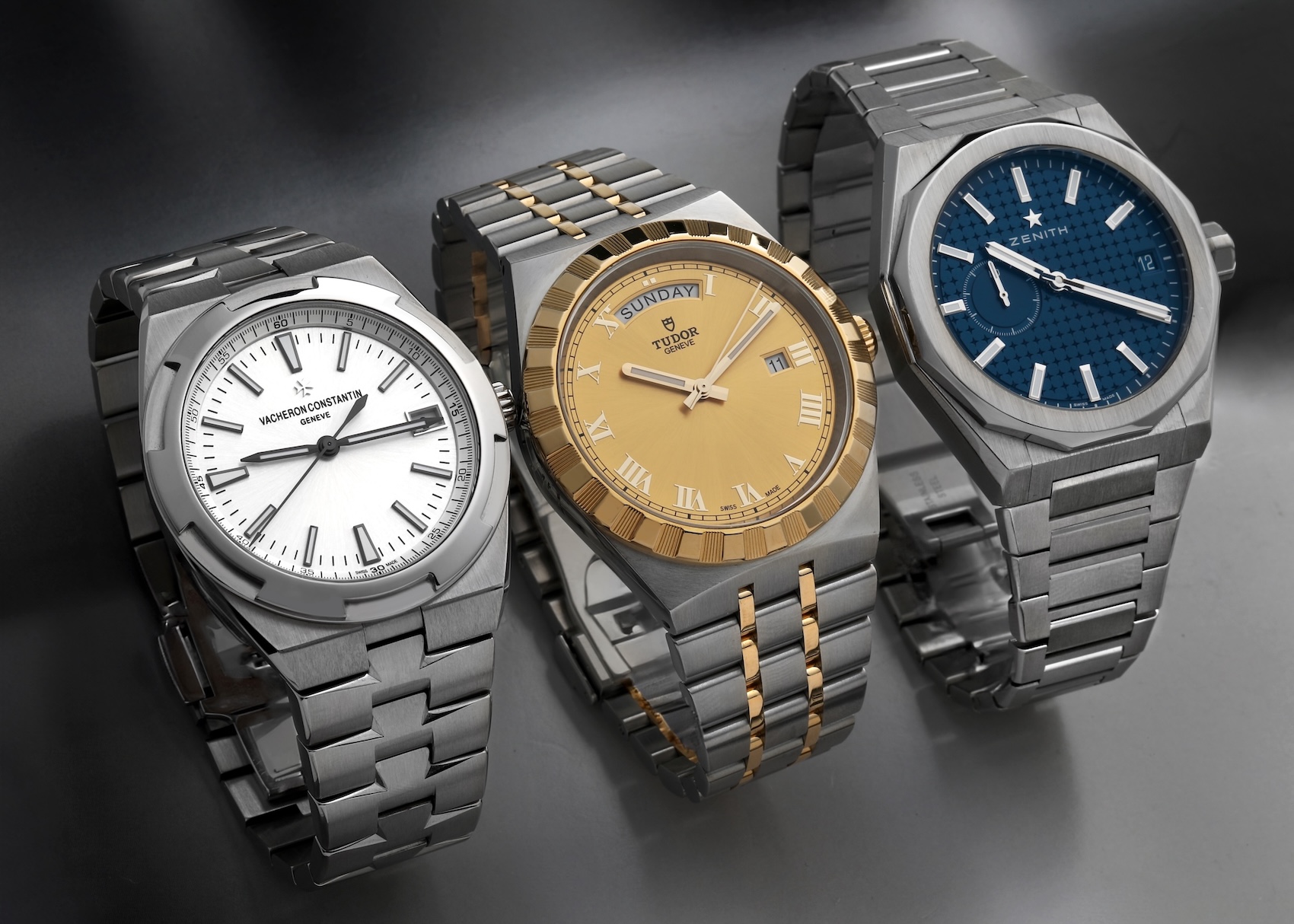
The integrated bracelet is arguably the most defining design language of the 1970s luxury sports watch era. By treating the case and the bracelet as a single, cohesive architectural form, watchmakers created a silhouette that flows seamlessly from the wrist to the dial.
While the conversation almost always starts with Gerald Genta’s two most famous creations, the landscape of integrated bracelets extends far beyond them. From revived historical references to unexpected angular quartz-era icons, here is a look at eight exceptional timepieces that showcase the enduring power of the integrated design.
The Pioneers of the Form
It is impossible to discuss the integrated bracelet without acknowledging the two titans that established the category. However, looking at specific, highly complicated references reminds us why these models earned their pedigree.
Audemars Piguet Millenary Morita Limited Edition (15330OR)
The Royal Oak birthed the luxury sports watch category in 1972, but this specific reference elevates the original steel concept through the sheer heft of 18k white gold. Measuring 41mm with a striking “Grande Tapisserie” blue dial, the 26239BC integrates the manufacturer’s self-winding flyback chronograph Calibre 4401. The white gold execution offers a subtle, under-the-radar aesthetic to the untrained eye, while delivering an unmistakable physical presence on the wrist. The way the light catches the brushed flat surfaces and hand-polished bevels of the integrated links is a masterclass in metal finishing.
Patek Philippe Nautilus Chronograph (Ref. 5980/1A-001)
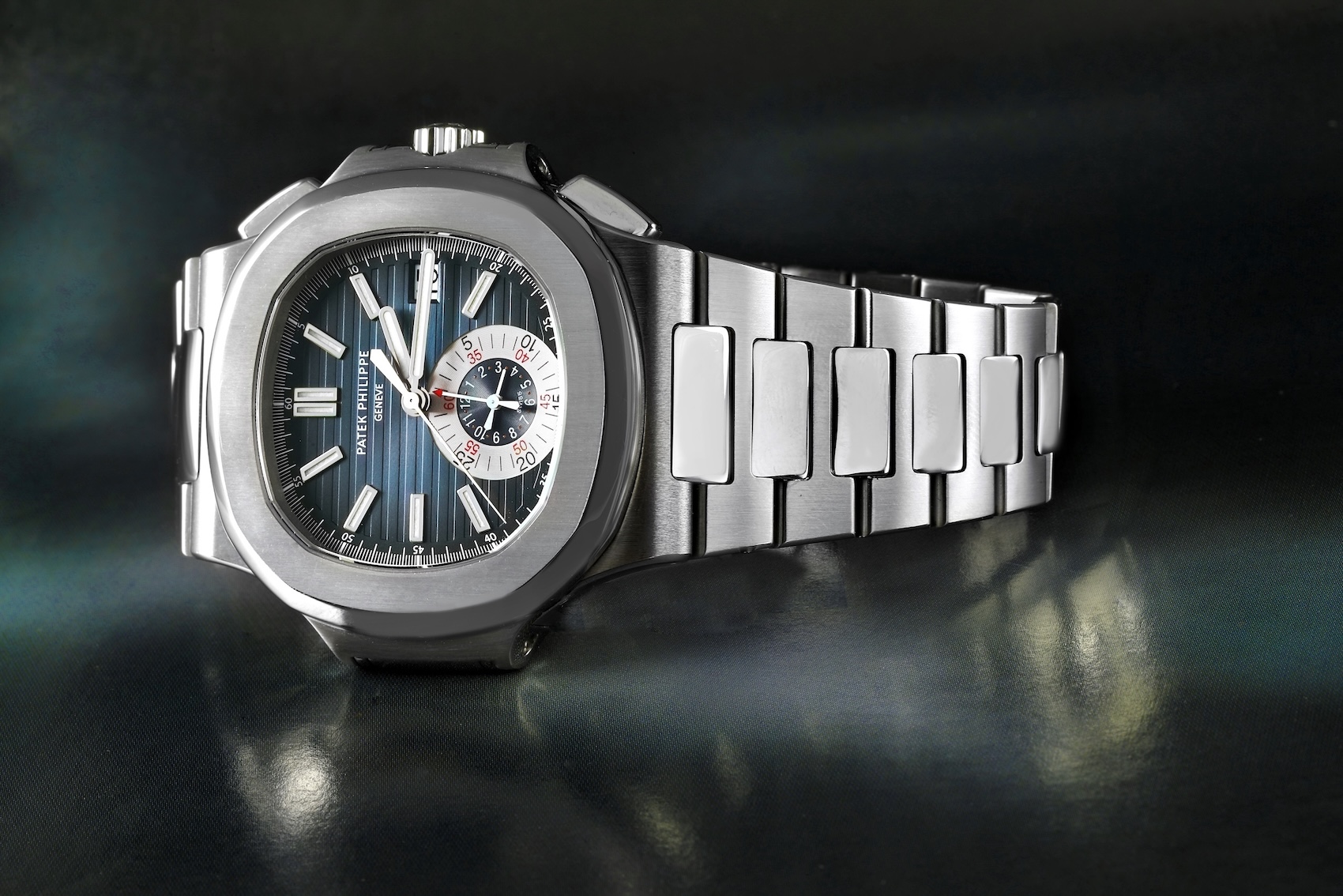
Introduced to celebrate the Nautilus’s 30th anniversary, the 5980/1A brings serious mechanical complication to the iconic porthole design. The integration of the steel bracelet here is famously fluid, with the polished central links contrasting against the satin-brushed outer links. What makes this reference a standout is the dial symmetry; rather than cluttering the signature horizontally embossed blue dial with multiple sub-dials, Patek Philippe utilizes a brilliant single monocounter at 6 o’clock to track both chronograph minutes and hours.
The Holy Trinity Peer
Vacheron Constantin Overseas (Ref. 4500V)
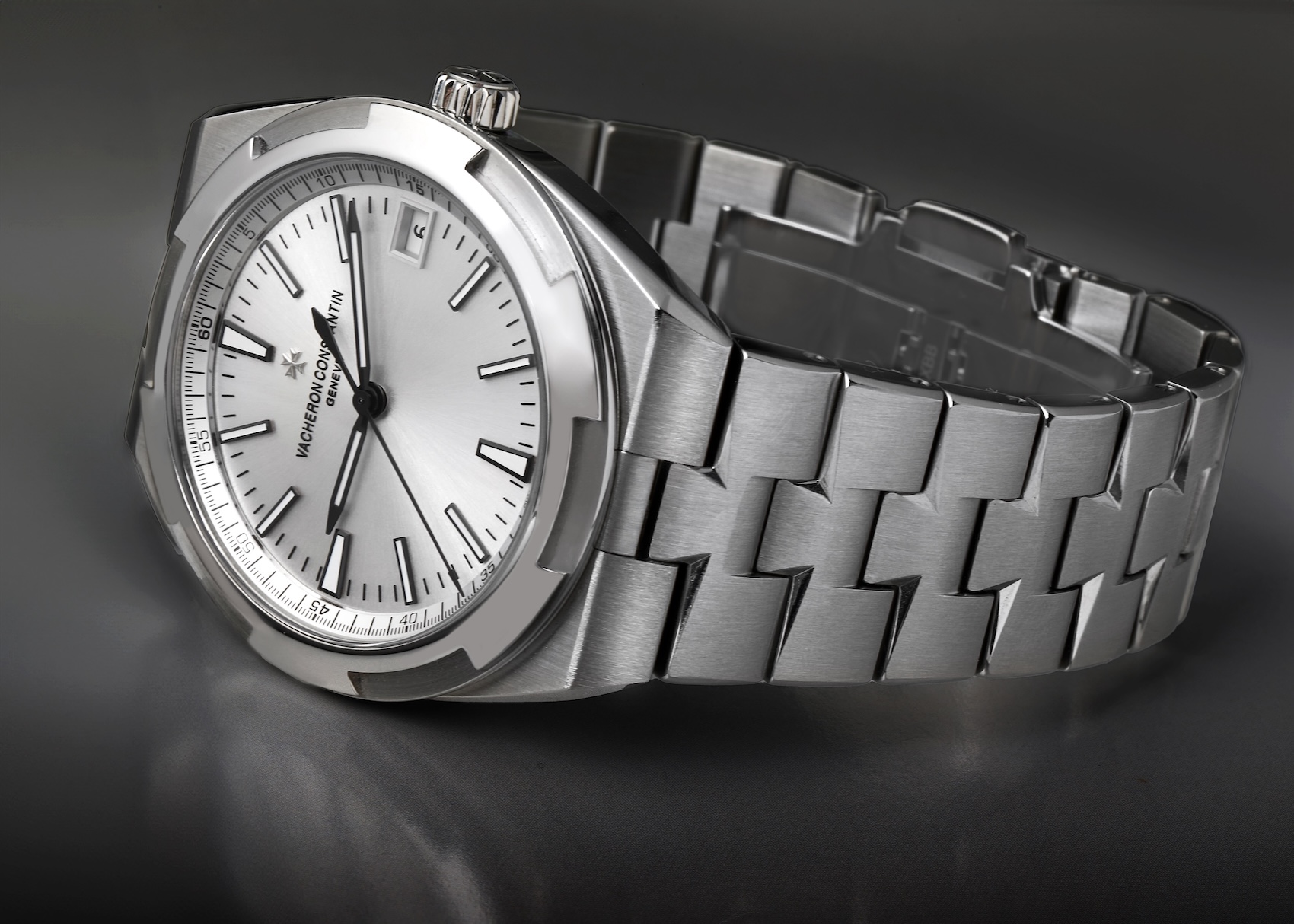
Often discussed in the same breath as the Royal Oak and Nautilus, the Overseas brings a distinctly different flavor to the integrated bracelet category. The silver-dialed 4500V is anchored by its recognizable six-sided bezel, but the bracelet is where the design truly shines. The links are shaped like half-Maltese crosses, paying homage to the brand’s emblem. Furthermore, Vacheron Constantin mastered modern ergonomics by engineering a highly intuitive quick-release system, allowing the wearer to swap between the steel bracelet, leather, and rubber straps in seconds—though the architectural beauty of the steel bracelet is difficult to take off.
From heavy-hitting chronographs to sleek time-and-date models, find the reference that perfectly aligns with your wrist and aesthetic. [Shop All Luxury Watches]
The Modern Revivalists
The current appetite for 1970s aesthetics has led to some of the most exciting archival revivals in recent years, proving that integrated designs can be updated for modern sensibilities.
IWC Ingenieur Automatic 40 (Ref. IW328901)
For decades, enthusiasts clamored for a return to Genta’s Ingenieur SL (Ref. 1832) from 1976. IWC delivered with the IW328901. This 40mm steel model with a black grid dial perfectly captures the brutalist, functional aesthetic of the original. The five functional polygonal screws on the bezel are now perfectly aligned, but the true triumph is the H-link integrated bracelet. It has been completely re-engineered for modern ergonomics, offering a closed, seamless taper that drapes incredibly well on the wrist.
Zenith Defy Skyline 41 (Ref. 03.9300.3620)
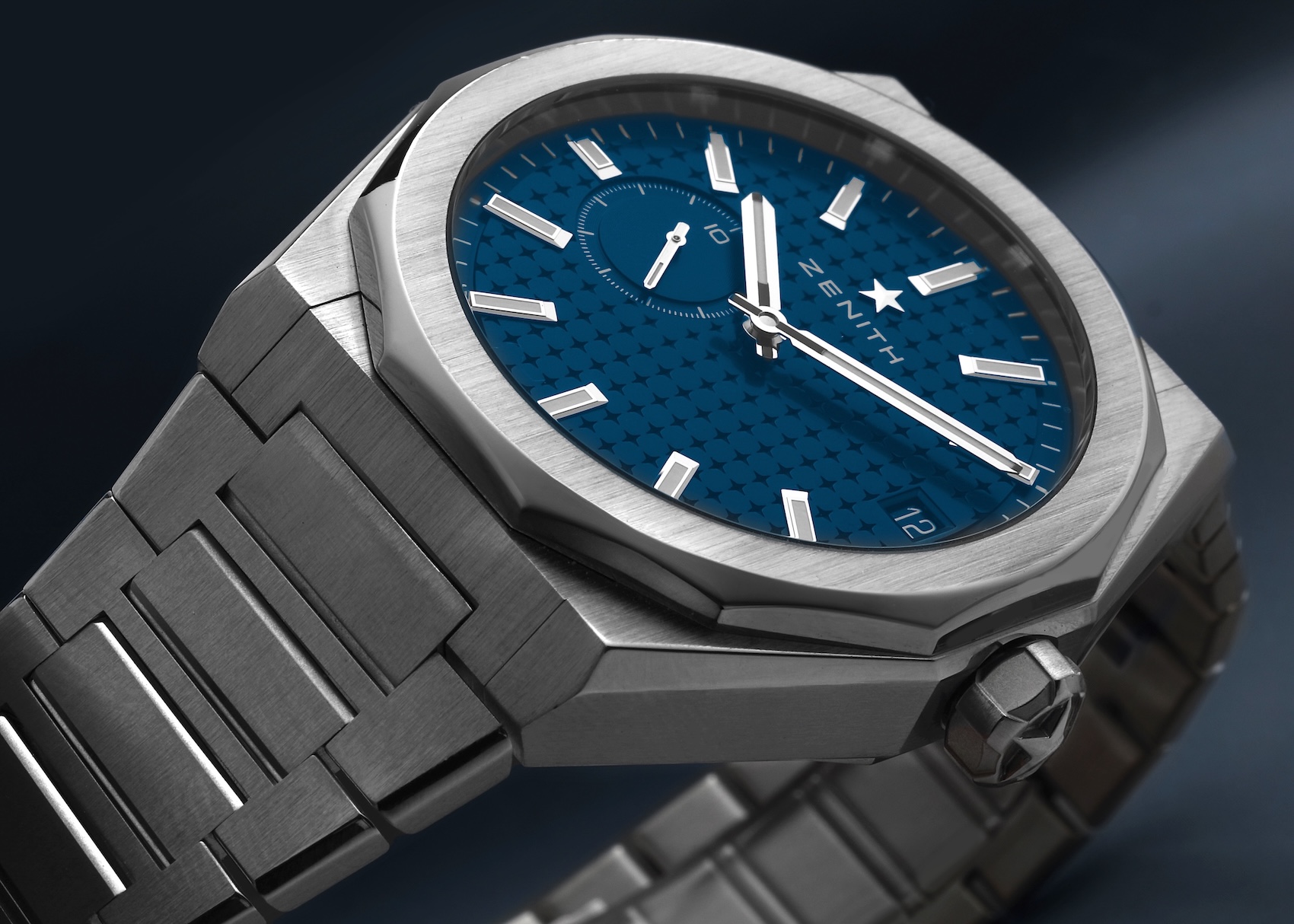
While Zenith is primarily known for the El Primero chronograph, the Defy Skyline proves their mastery of time-and-date sports watches. Drawing inspiration from the octagonal Defy models of 1969, the Skyline features a sharply faceted steel case that flows directly into an integrated steel bracelet. The blue dial is punctuated by a repeating four-pointed star motif, but the visual centerpiece is the sub-dial at 9 o’clock. Powered by the high-frequency El Primero 3620 caliber, the small seconds hand completes a full rotation every 10 seconds, offering a frantic, mesmerizing display of mechanical precision.
Cartier Santos de Cartier Large (Ref. WSSA0018)
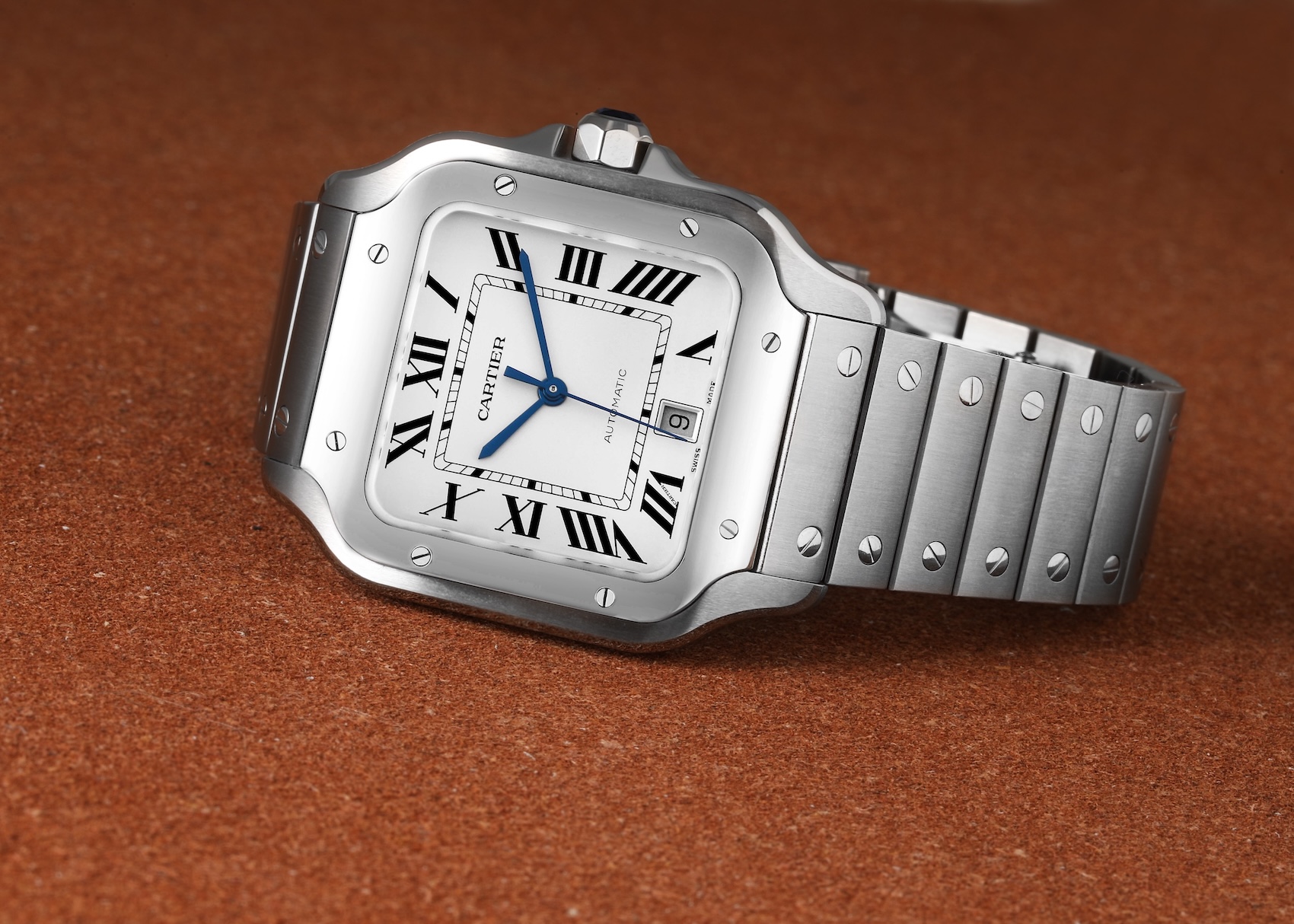
While the original Cartier Santos predates the 1970s luxury sports watch era by several decades, its late-70s redesign firmly anchored it in the integrated bracelet aesthetic. The WSSA0018 in steel is a masterclass in cohesive architecture. Mechanically, the watch features defined lugs, making it a “quasi-integrated” design, but visually, the lines of the curved case flow flawlessly and gaplessly into the bracelet. The signature exposed screws on the square bezel are mirrored perfectly down the tapering steel links, creating an unbroken visual chain. Furthermore, Cartier’s modern “QuickSwitch” system allows the wearer to effortlessly remove the bracelet, though the seamless integration of the metal bracelet remains the ultimate expression of this model’s industrial elegance.
The Unexpected Icons
Not all integrated bracelets follow the Genta playbook. Some of the most compelling designs come from brands experimenting outside their traditional design codes.
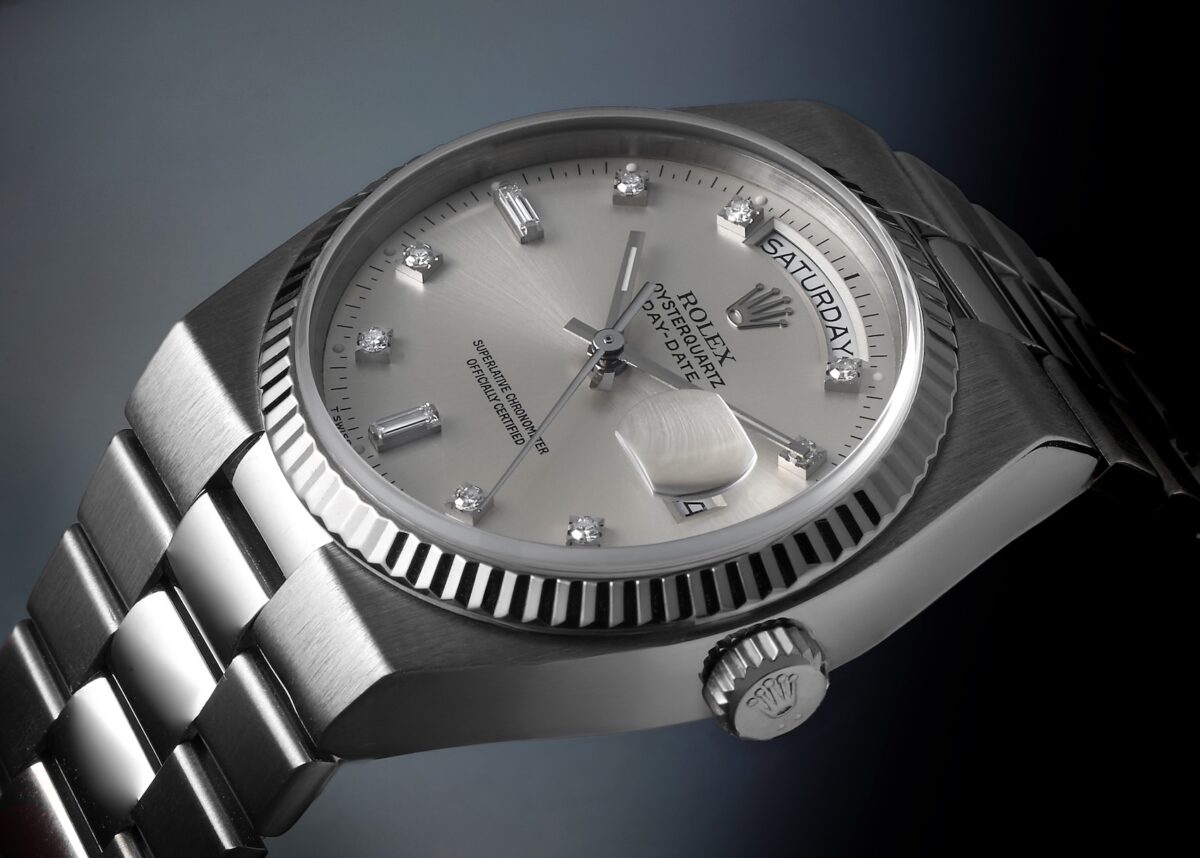
Rolex Oysterquartz President Day-Date (Ref. 19019)
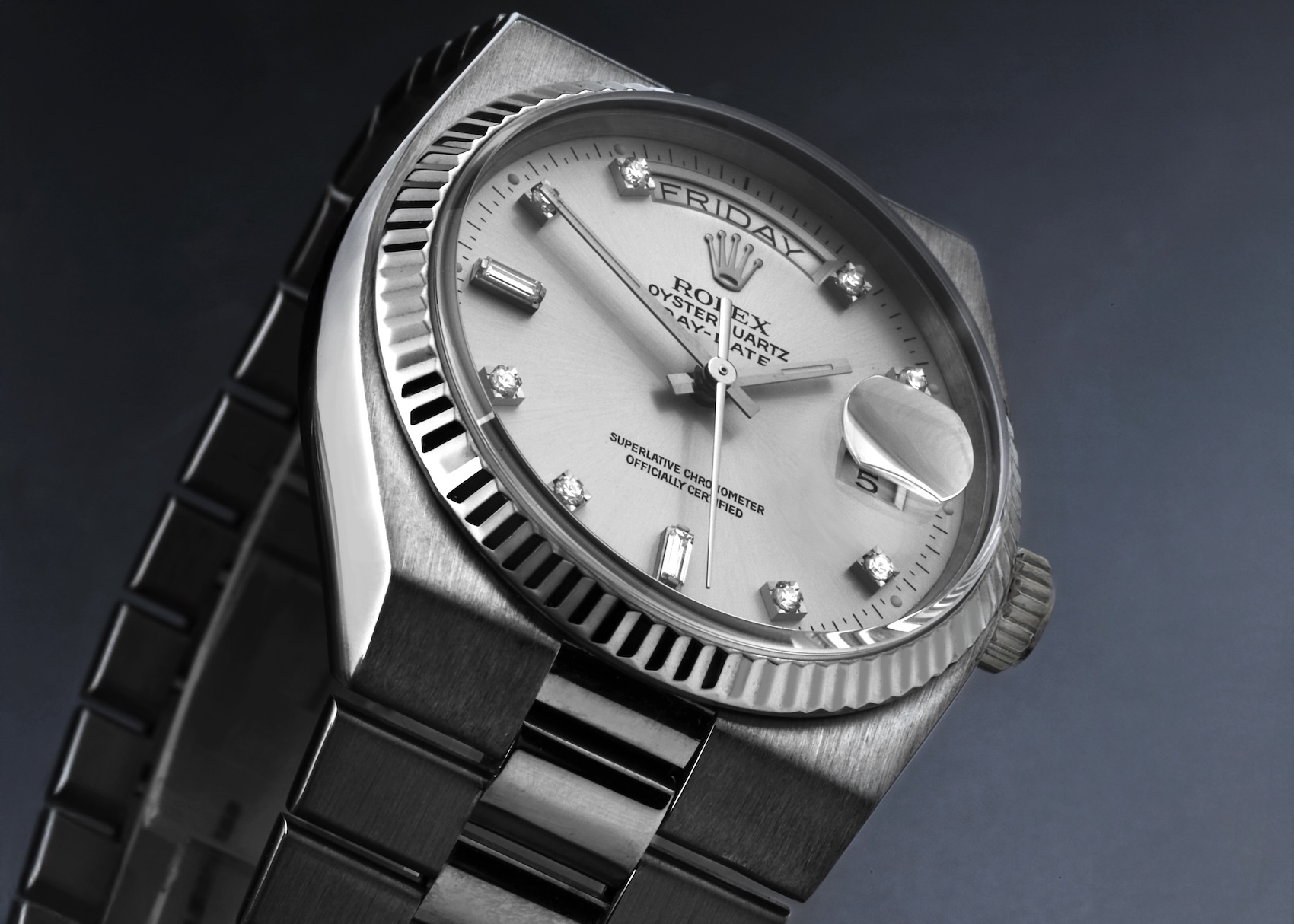
Rolex is rarely associated with integrated bracelets, which is exactly what makes the Oysterquartz so highly sought after by collectors today. Born during the quartz crisis, the Ref. 19019 in 18k white gold features a radically different case architecture from the standard Day-Date. The case is distinctly angular, featuring sharp, chamfered edges that flow directly into an integrated President bracelet. It is a brilliant, bold departure from Rolex’s usual conservative case shapes, housing one of the most over-engineered quartz movements ever produced.
Omega Constellation Co-Axial (Ref. 123.10.38.21.06.001)
The Constellation “Manhattan” design, first introduced in 1982, offers a completely different approach to the integrated bracelet. This 38mm steel model features the collection’s hallmark “griffes” or claws gripping the bezel, but the integration is defined by its mono-rang (single-link) bracelet. The horizontal links allow for a highly articulated, flexible fit. Paired with a grey dial and powered by a Co-Axial chronometer movement, it remains one of the most distinctive silhouettes in horology.
The Accessible Entry
Tudor Royal (Ref. 28603)
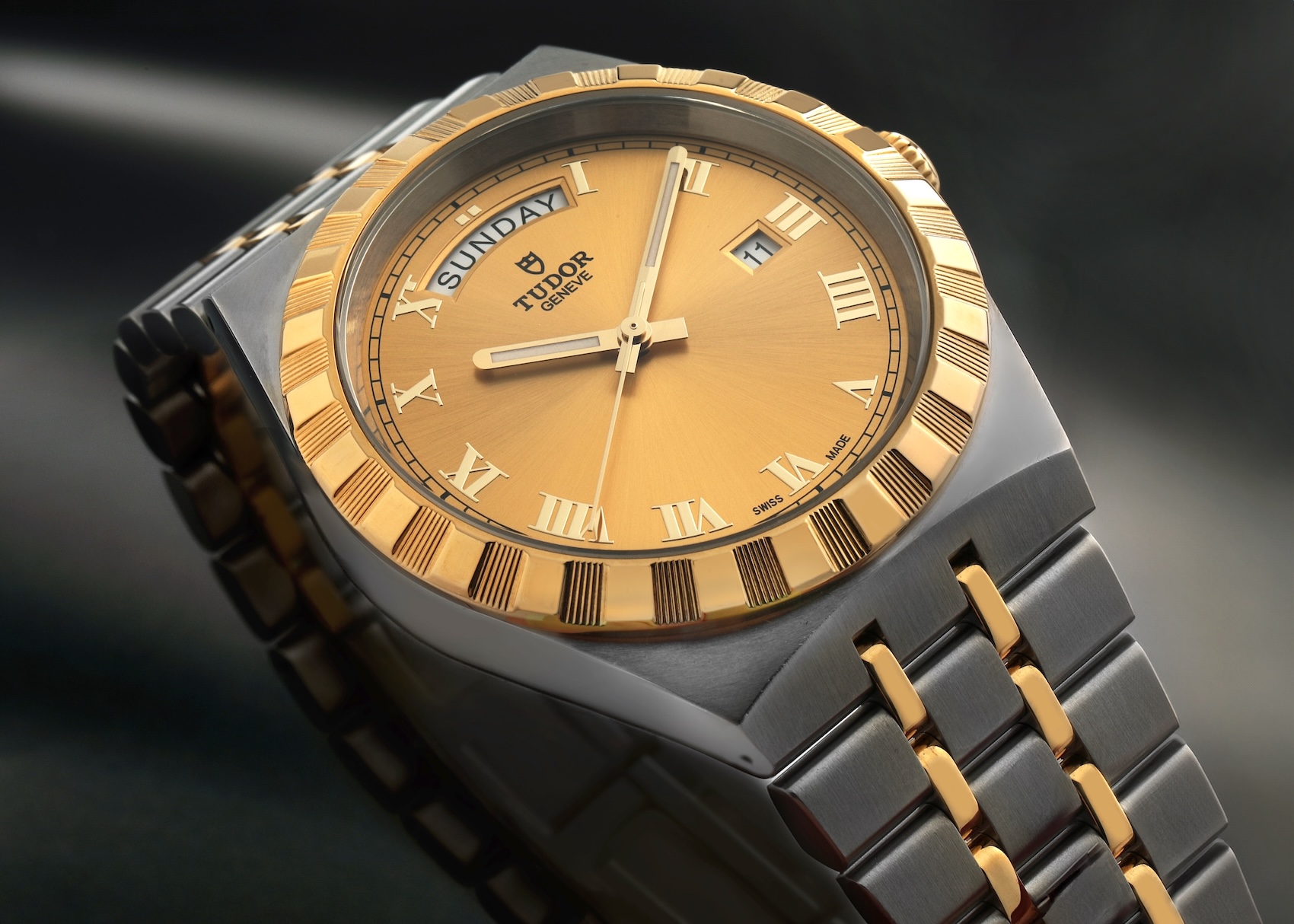
Proving that exceptional integrated design doesn’t require a five-figure budget, the Tudor Royal offers a compelling blend of sport and dress aesthetics. This 41mm model in steel and yellow gold features a sunray-finish champagne dial with a day display at 12 o’clock and a date at 3. The notched bezel provides beautiful texture, but the five-link integrated bracelet is the star. With alternating steel and yellow gold links, it brings a distinct 1970s sport-chic vibe, executed with Tudor’s modern build quality and reliability.
The Architectural Appeal of the Integrated Bracelet
The enduring appeal of the integrated bracelet lies in its cohesive vision. It fundamentally changes how a watch interacts with the wrist, transforming it from a mere timekeeper on a strap into a unified, sculptural piece of industrial design. Whether you gravitate toward the pioneering heavyweights of the 1970s, the meticulous engineering of modern revivals, or the unexpected angles of the quartz era, these models offer a distinct wearing experience that stands entirely apart from traditional lugged cases.
To explore these structural masterpieces firsthand and discover the reference that speaks to your personal sensibilities, we invite you to browse our complete inventory at SwissWatchExpo. Every timepiece in our collection is on hand and rigorously evaluated by our in-house watchmakers for uncompromising authenticity and mechanical integrity, ensuring a seamless transition from our vault to your collection.