
In the world of haute horlogerie, there is luxury, and then there is the ultimate pinnacle.
While the overall luxury watch market is brimming with amazing timepieces built for deep-sea diving, aviation and motorsport, there’s an upper echelon above them all. For decades, collectors and horological scholars have known of an exclusive tier of Swiss watchmaking known as the “Holy Trinity” (or La Sainte Trinité).
This elite triad of Patek Philippe, Audemars Piguet and Vacheron Constantin are not united merely by price or modern hype, but their membership is defined by three pillars: an unbroken lineage of mechanical production, a historical mastery of grand complications, and an uncompromising adhesion to traditional hand-applied finishing techniques such as anglage and perlage.
While other prominent manufactures have achieved massive global scale, the Holy Trinity remains the gold standard of provenance and craft. Whether you are studying the centuries-old heritage of these historic maisons or tracking the modern market trajectory of a Royal Oak or Nautilus, understanding the Holy Trinity is the foundation of serious watch collecting.
Patek Philippe: The Pinnacle of Haute Horlogerie

If the Holy Trinity has a reigning monarch, the market and horological scholars largely agree it is Patek Philippe. Founded in 1839, the maison found its true trajectory when Antoine Norbert de Patek joined forces with French watchmaker Jean Adrien Philippe—the brilliant mind who invented the keyless winding and hand-setting system, freeing watches from the cumbersome winding key.
For nearly two centuries, Patek Philippe has operated with a singular focus on uncompromising quality, famously abandoning the prestigious Geneva Seal in 2009 simply because they felt it wasn’t strict enough, creating their own hyper-rigorous “Patek Philippe Seal” instead.
This relentless pursuit of perfection has resulted in some of the most important milestones in watchmaking history:
The First Perpetual Calendar Wristwatch (1925): Patek miniaturized a complex movement that mechanically accounts for leap years and varying month lengths, establishing themselves as the undisputed masters of calendar complications.
The Graves Supercomplication (1933): Commissioned by banker Henry Graves Jr., this pocket watch featured a staggering 24 complications. It held the title of the most complicated watch ever created for over half a century and later sold at auction for $24 million.
The First Annual Calendar (1996): Bridging the gap between a simple date and a perpetual calendar, Patek invented the Annual Calendar (Reference 5035), a highly practical complication that only requires one manual adjustment per year at the end of February.
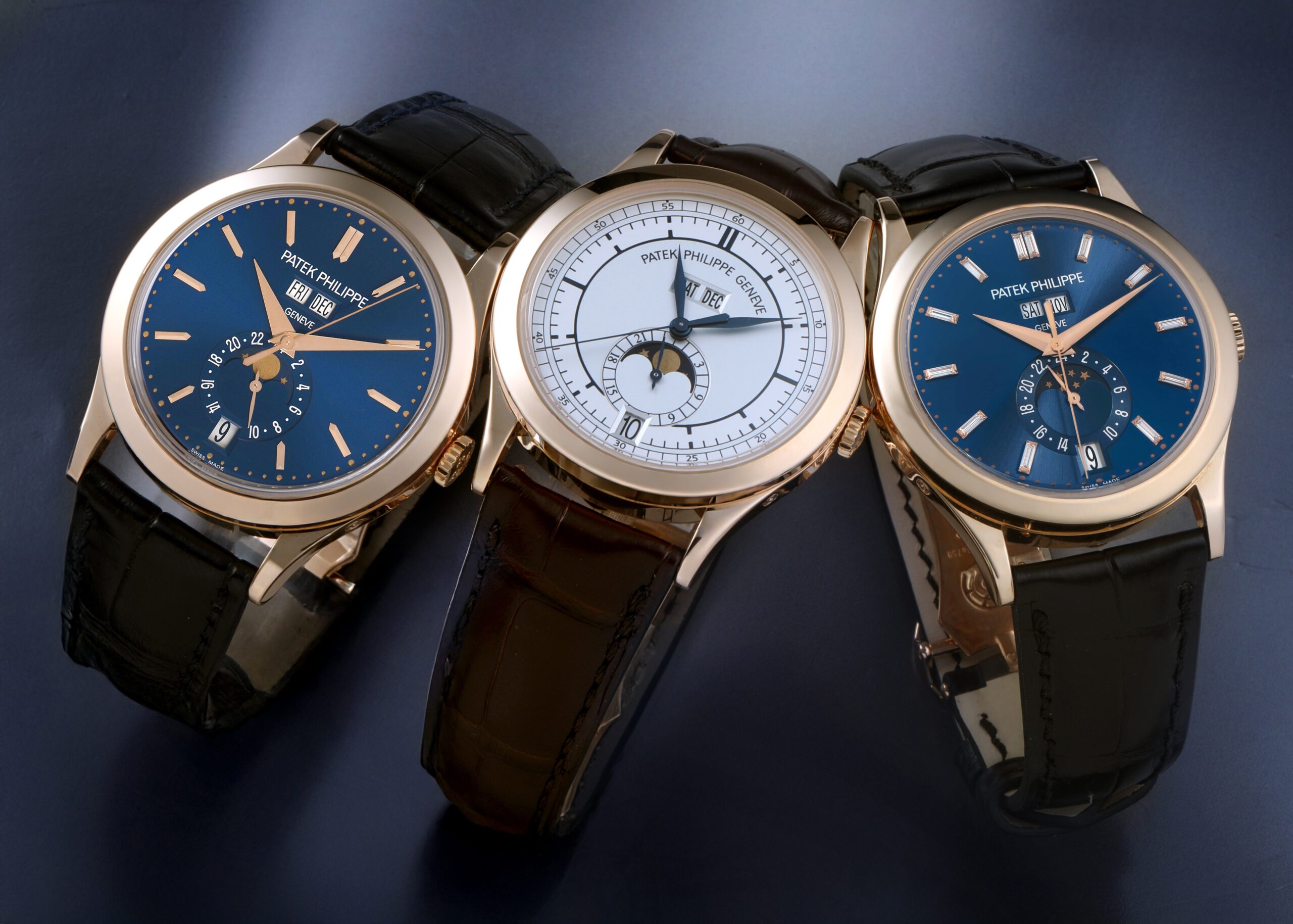
While their Calatrava, Complications, and Grand Complications lines represent the traditional soul of the brand, it is impossible to discuss Patek Philippe today without addressing their absolute dominance in the luxury sports watch sector.
As we celebrate the monumental 50th anniversary of the Nautilus in 2026, the Gérald Genta-designed masterpiece continues to be the ultimate status symbol. The infamous Reference 5711 in steel created an unprecedented market frenzy—peaking at dizzying heights of around $180,000 on the secondary market in early 2022 before its discontinuation.
Today, the market has stabilized from that hyper-inflated peak, but the Nautilus (alongside its sportier sibling, the Aquanaut) remains one of the most fiercely coveted and historically significant timepieces on the planet, driving modern Patek Philippe scholarship and collector demand.
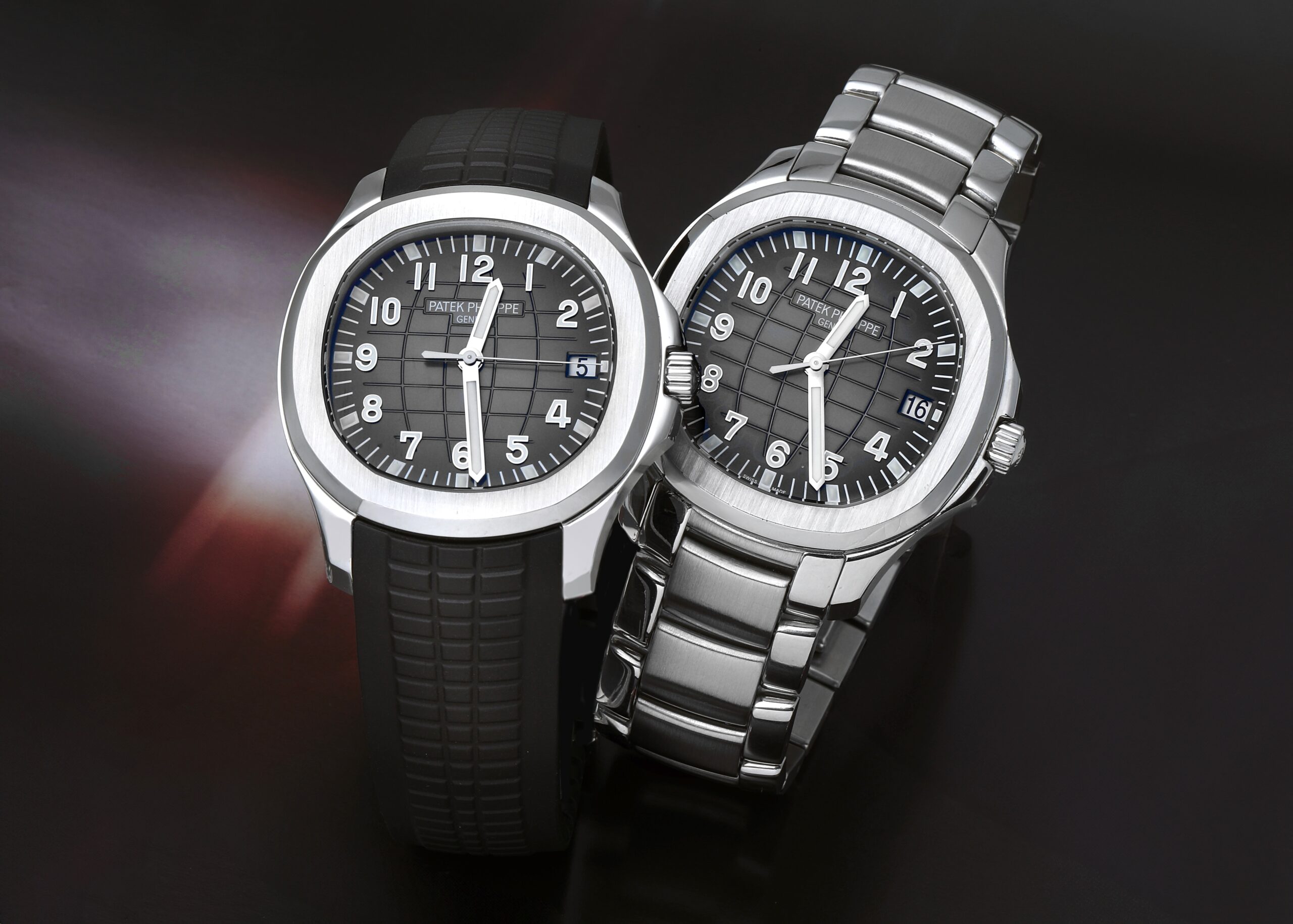
Discover the pinnacle of Swiss watchmaking.
Shop our Patek Philippe Collection
Audemars Piguet: The Disruptor of Haute Horlogerie
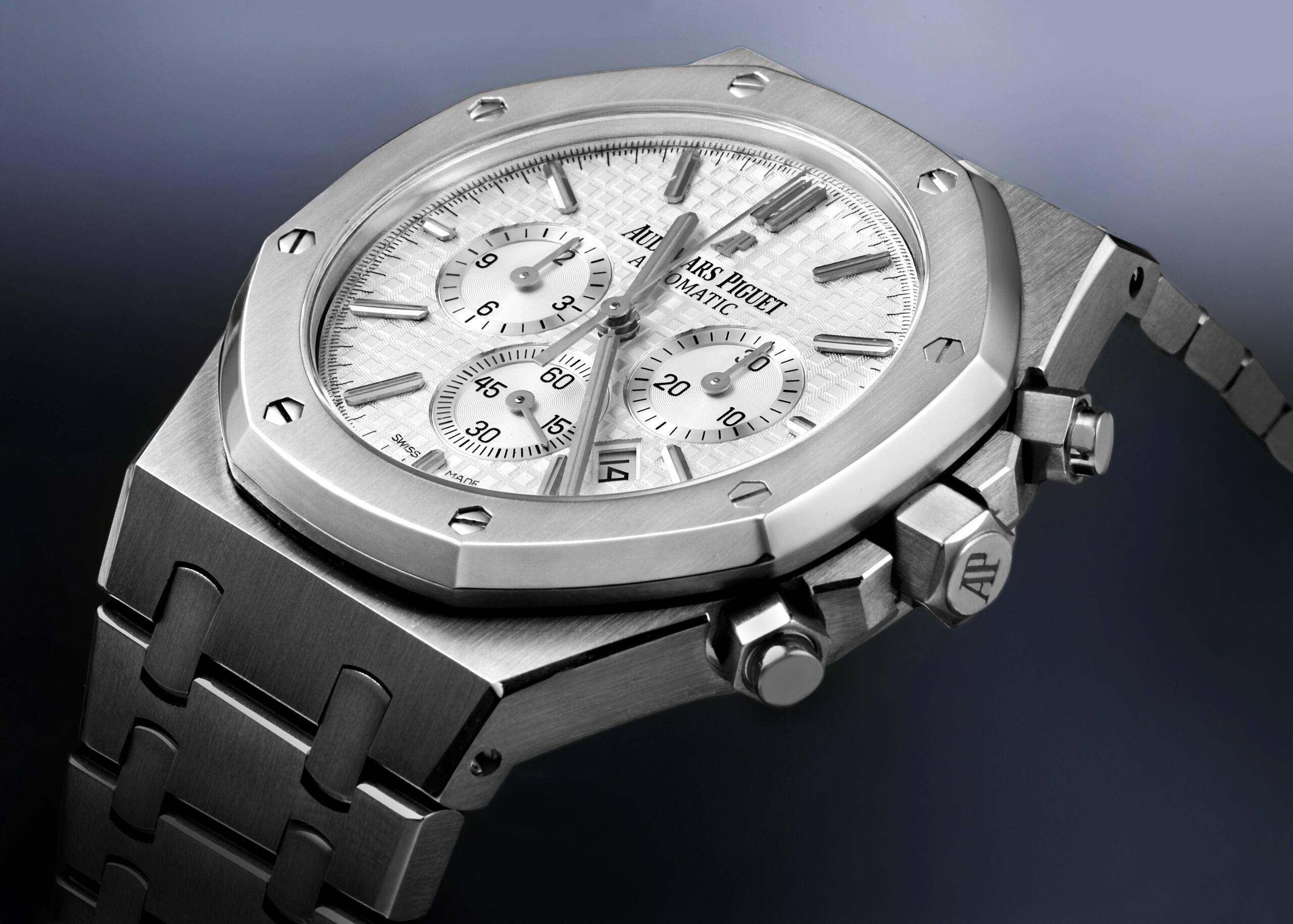
Founded in 1875 in the Vallée de Joux—the historic cradle of Swiss watchmaking—Audemars Piguet was born from the partnership of two young visionaries: Jules Louis Audemars and Edward Auguste Piguet. The two complemented each other’s skills perfectly: Audemars worked on creating complicated movement blanks, while Piguet was an expert in the final regulation and finishing of the calibers.
Unlike many historic maisons that have been absorbed by large conglomerates, Audemars Piguet remains fiercely independent and family-owned to this day, which allows them to push boundaries without corporate constraint. This rebellious spirit has resulted in several industry-defining world firsts:
The First Minute Repeater Wristwatch (1892): Long before wristwatches were mainstream, AP miniaturized a highly complex minute repeater mechanism—originally meant for pocket watches—into a wristwatch format, forever changing how complications were worn.
The First Jumping-Hour Wristwatch (1921): Showcasing their mastery over unconventional time displays, they developed a caliber where the hour digit instantly “jumps” in an aperture the exact moment the minute hand hits 60.
The First Skeletonized Watch (1934): AP elevated the movement itself into a visual art form, painstakingly stripping away non-essential metal from the caliber bridges and plates to reveal the mechanical heartbeat inside.
The First Luxury Steel Sports Watch (1972): This was AP’s ultimate mic-drop moment. Designed by the legendary Gérald Genta, the Royal Oak defied the era’s standard of small, gold dress watches. With its octagonal bezel, exposed screws, and integrated bracelet, it commanded a higher price in stainless steel than many gold watches of the time, effectively inventing the luxury sports watch category.
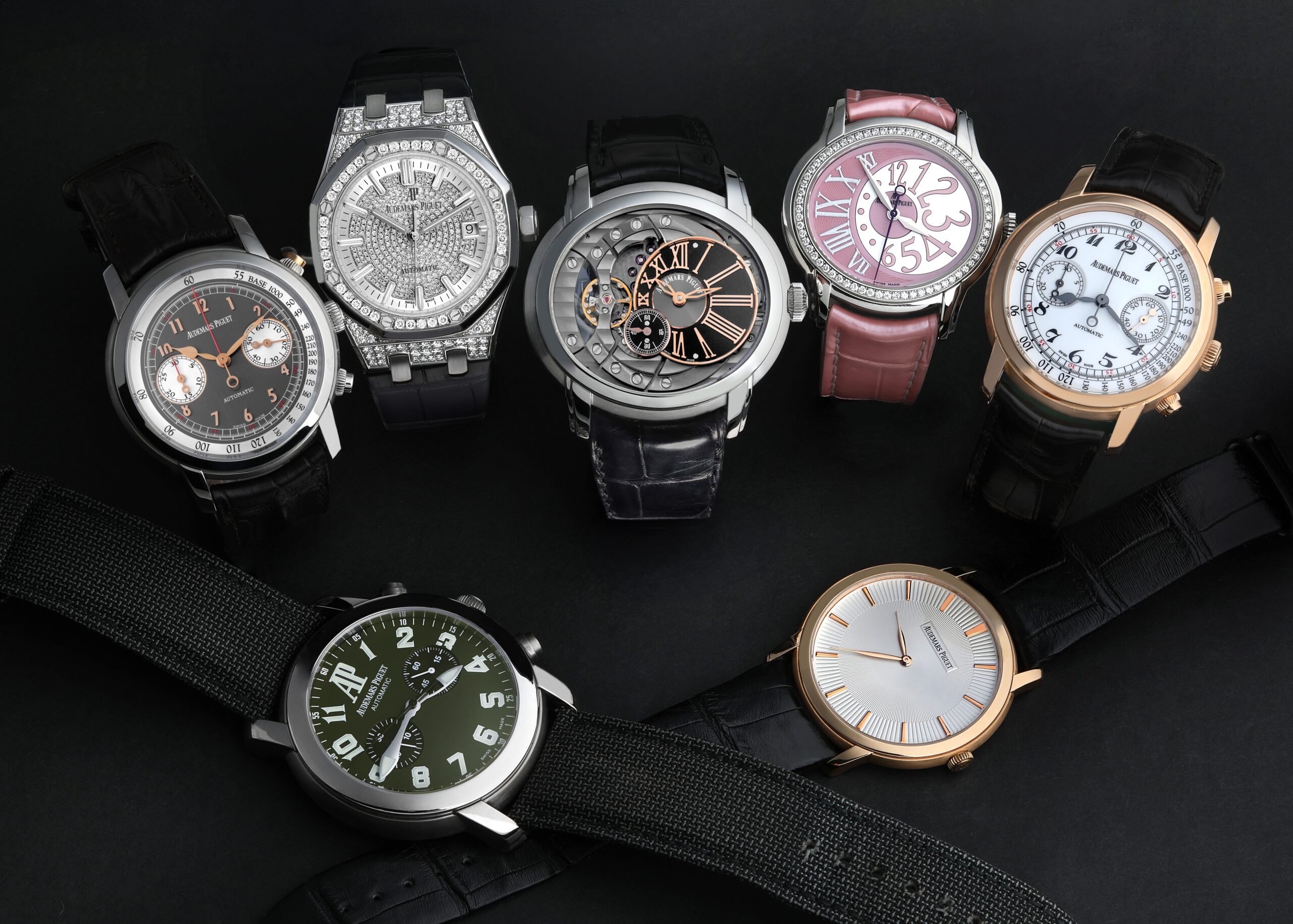
Today, Audemars Piguet’s catalog is dominated by the Royal Oak and its bolder, highly robust sibling, the Royal Oak Offshore. However, the manufacture continues to prove its high-complication pedigree through the Code 11.59 collection. With its complex, architectural case design and housing of their most advanced modern calibers—from flying tourbillons to ultra-thin perpetual calendars—Audemars Piguet continues to bridge the gap between 19th-century craft and 21st-century avant-garde design.
Elevate your collection with the disruptor of luxury sports watches.
Browse our Audemars Piguet Selection
Vacheron Constantin: The Oldest Continuous Watchmaker
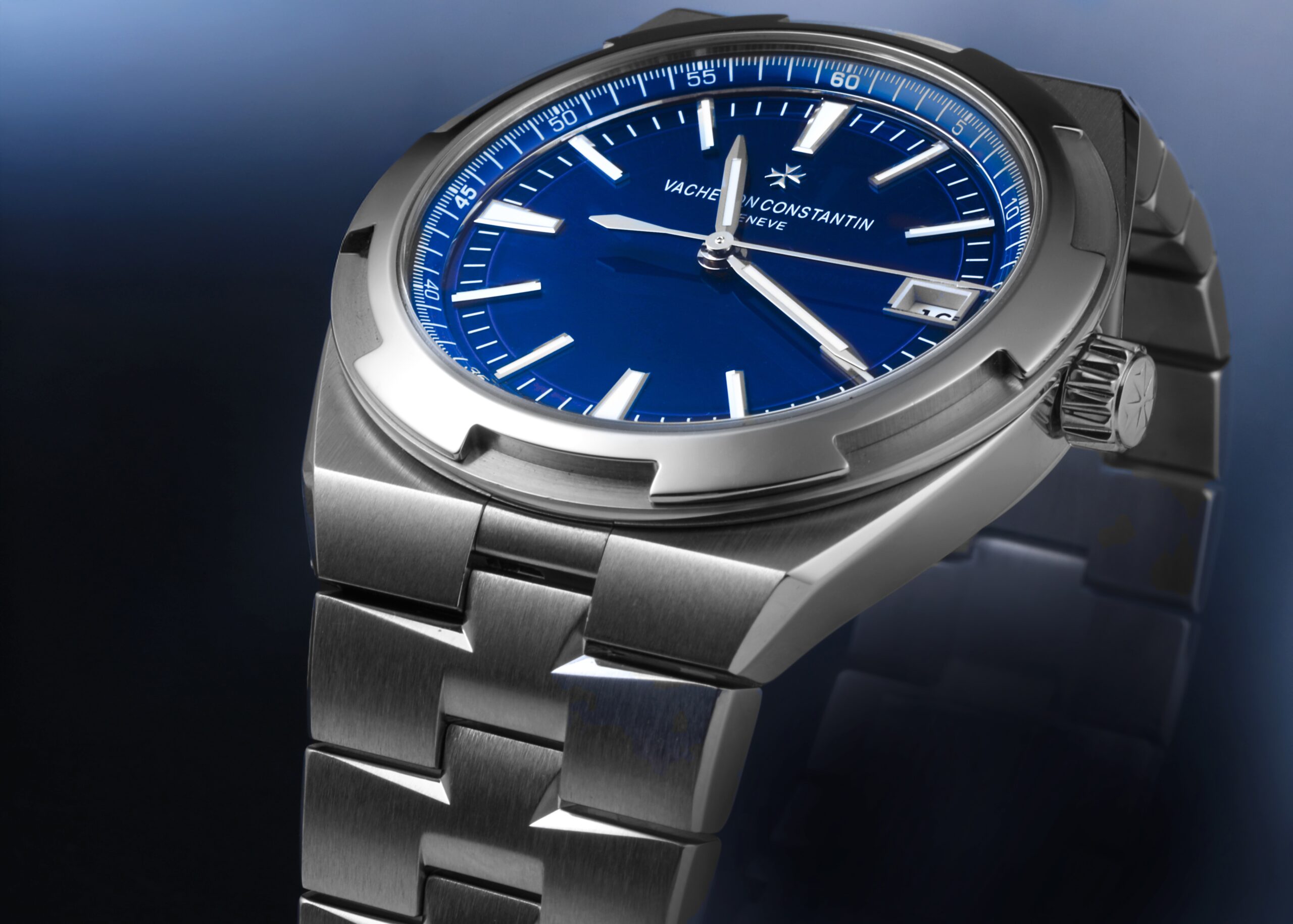
Rounding out the Holy Trinity is Vacheron Constantin, the true elder statesman of Swiss watchmaking. Founded in 1755 by Jean-Marc Vacheron, it holds the prestigious title of the world’s oldest continuous watch manufacturer. While other historic brands may claim older founding dates, they suffered dormant periods or bankruptcies. Vacheron Constantin has operated without a single interruption for nearly 270 years, surviving the French Revolution, multiple World Wars, and the Quartz Crisis.
In 1819, François Constantin joined the firm, famously penning the motto that the brand still operates by today: “Faire mieux si possible, ce qui est toujours possible” (Do better if possible, and that is always possible).
This dedication to continuous improvement and classical craftsmanship makes Vacheron Constantin the ultimate connoisseur’s choice. They are one of the most steadfast proponents of the Poinçon de Genève (Geneva Seal), ensuring their movements meet the absolute strictest standards of hand-finishing and geographical provenance.
Their historical and modern milestones demonstrate an impressive range of capabilities:
The First Engine-Turned Dials (1790): Vacheron was a pioneer in utilizing guilloché (engine-turning) on dials, a technique that remains a hallmark of high-end traditional watchmaking today.
The First Non-Magnetic Timepiece (1885): Long before the Rolex Milgauss or Omega’s modern Master Chronometer certification, Vacheron created a pocket watch using palladium, bronze, and gold components to withstand magnetic fields.
The Reference 57260 (2015): To celebrate their 260th anniversary, the maison unveiled the most complicated watch ever made. Crafted by their elite Les Cabinotiers department, this bespoke pocket watch houses a mind-bending 57 complications, requiring eight years to assemble.
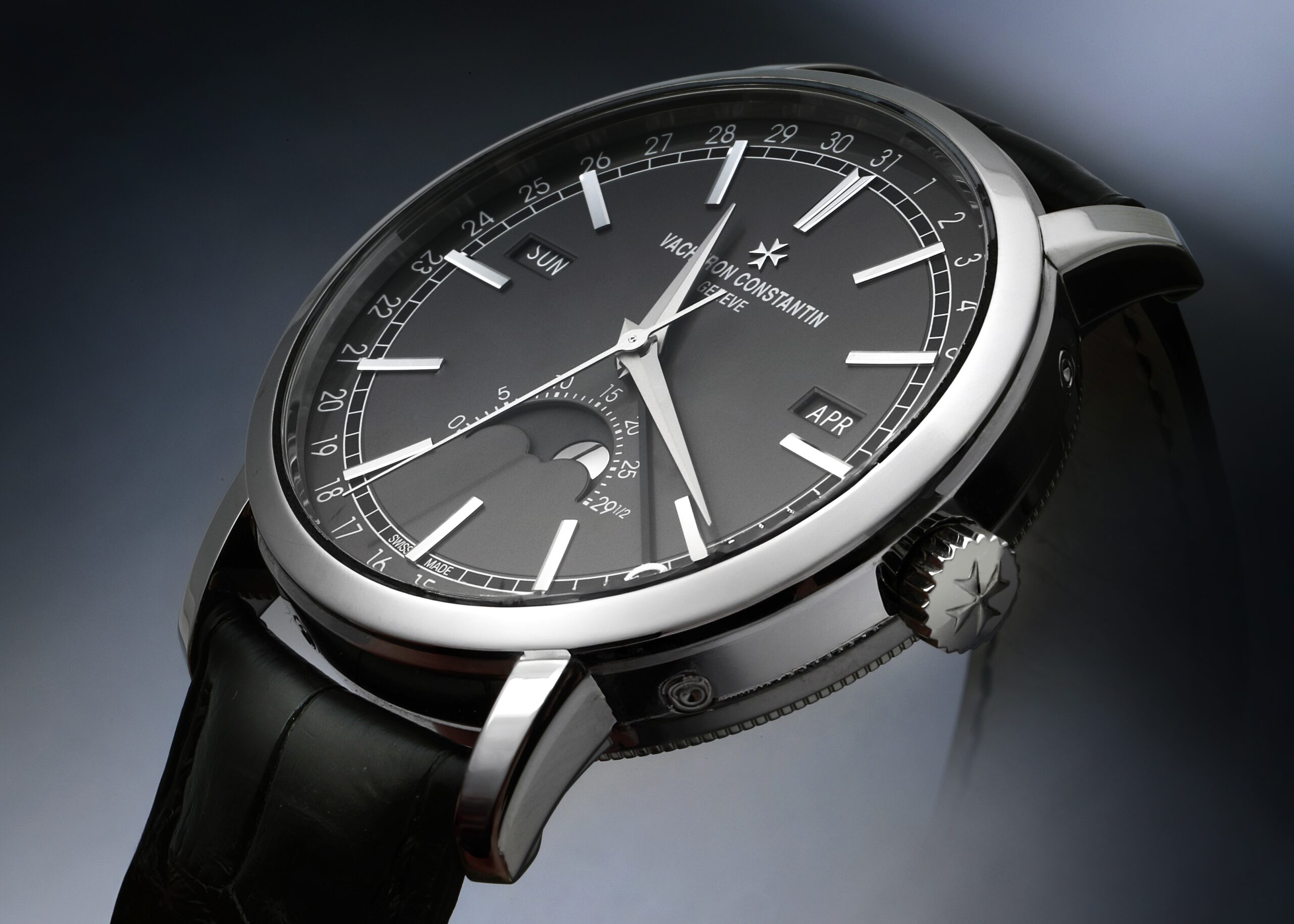
In the modern retail landscape, Vacheron Constantin perfectly bridges the gap between ultra-traditional dress watches and contemporary luxury. Their Patrimony and Traditionnelle lines are masterclasses in minimalist, high-end dress watch design, offering everything from ultra-thin two-handers to minute repeaters.
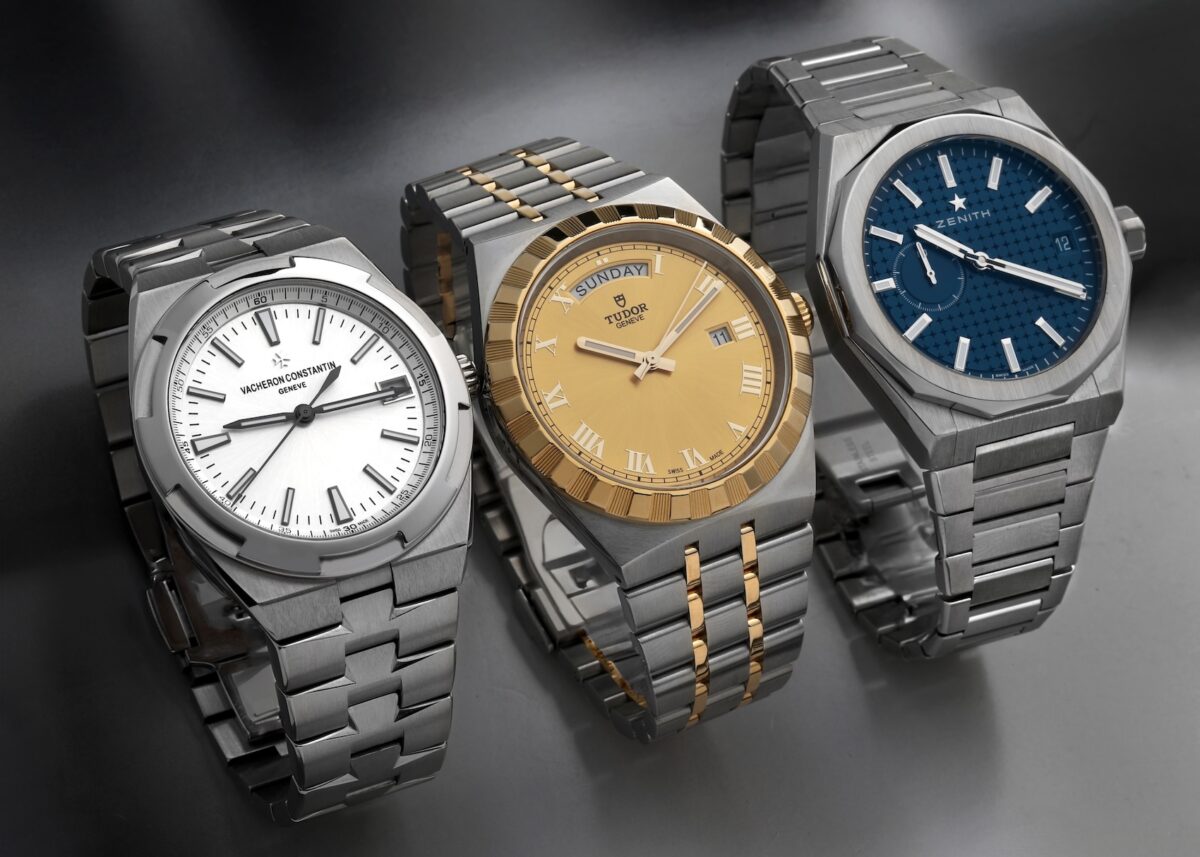
However, their most sought-after model today is the Overseas. Serving as their answer to the Nautilus and Royal Oak, the Overseas features a bezel inspired by the brand’s Maltese Cross emblem. Celebrated for its highly practical quick-release interchangeable strap system, the Overseas offers a slightly more under-the-radar, versatile alternative within the hyper-competitive luxury sports watch category.
Discover why Vacheron Constantin is the choice of the true watch connoisseur.
View our Vacheron Constantin Collection
While their histories are distinct, seeing the ‘Big Three’ side-by-side reveals the shared DNA of excellence that defines the Holy Trinity. From the iconic octagonal bezel of the Royal Oak to the mesmerizing blue of the Nautilus and Overseas dials, watch these legends in motion below.
Frequently Asked Questions (FAQ)
Why is Rolex not in the Holy Trinity of Watches?
While Rolex is the most recognized luxury watch brand in the world, they are historically known for pioneering robust, mass-produced tool watches (like the Submariner and GMT-Master). The Holy Trinity is strictly defined by haute horlogerie—a focus on extremely low-production, ultra-complex movements (like perpetual calendars and minute repeaters), and rigorous hand-finishing techniques. Rolex builds exceptional, durable timepieces, but they operate in a different category of watchmaking than Patek Philippe, Audemars Piguet, and Vacheron Constantin.
Is A. Lange & Söhne in the Holy Trinity of Watches?
No, A. Lange & Söhne is not considered by many to be in the Holy Trinity, despite producing watches that rival or even exceed the Trinity in terms of high complications and exquisite hand-finishing. The Holy Trinity classification specifically refers to Swiss watchmakers with an unbroken lineage spanning centuries. A. Lange & Söhne is a German brand that was famously revived in the 1990s after the fall of the Berlin Wall.
Who decided the Holy Trinity of Watches?
There was no formal committee or governing body that decided the Holy Trinity. Instead, the term evolved organically in the 1970s among passionate watch collectors, auction houses and horological scholars. As the Quartz Crisis unfolded — when affordable battery-powered watches threatened to wipe out mechanical watchmaking — these three brands were collectively hailed as the ultimate champions of traditional, high-end Swiss watchmaking craft.
The Ultimate Collection: Why the Holy Trinity Still Matters in 2026
The “Holy Trinity of Watches” is more than just a marketing catchphrase; it is a testament to the survival and triumph of traditional Swiss artistry. The audacity of Audemars Piguet, the invincible market dominance and technical command of Patek Philippe, the unbroken legacy of Vacheron Constantin for centuries: these three maisons embody the best that a watch can be.
As we gaze into the horological future of 2026, the line between “investment” and “art” has never been blurrier. To own a watch from the Holy Trinity is not simply to tell the time, but to preserve a lineage of hand-finished movements, grand complications, and a level of quality that mass production cannot replicate.
Be it the porthole case of a Nautilus, the architectural mastery of a Royal Oak, or the understated elegance of an Overseas, these watches are the gold standard of any serious collection.
Find Your Next Masterpiece with SwissWatchExpo.
To land a watch of this caliber, you need a partner that understands the nuances of provenance and the importance of authenticity. At SwissWatchExpo, we specialize in curated, certified authentic, pre-owned luxury watches from the world’s most prestigious manufacturers.
Browse our selection and find the cornerstone of your collection today.